Introduction: The Crucible of Faith, Heritage, and Modernity
Ayodhya, a city deeply etched into the spiritual, mythological, and historical consciousness of the Indian subcontinent, is currently navigating an unprecedented urban, economic, and cultural metamorphosis. Historically revered as the birthplace of Lord Rama and recognized as the paramount capital of the ancient Kosala Kingdom, the city has long operated as a focal point of theological devotion, cultural production, and, more recently, intense historical contention. However, the date of January 22, 2024—marking the grand consecration (Pran Pratishtha) of the Ram Janmabhoomi Temple—served as a monumental inflection point, catalyzing a paradigm shift in the city’s developmental trajectory and its socio-economic fabric.
In the subsequent months and extending into the present landscape of 2026, Ayodhya has aggressively transitioned from a relatively overlooked, mofussil pilgrim town into a highly engineered global spiritual metropolis. This evolution is underpinned by a multi-billion-dollar infusion of state and private capital aimed at foundational infrastructural modernization, sophisticated technological integration, and the strategic amplification of its cultural assets. The overarching development blueprint seeks to balance the ontological sanctity of an ancient Vedic city with the epistemological and logistical demands of a twenty-first-century smart city capable of sustaining hundreds of millions of annual visitors.
Yet, this rapid, high-velocity transformation is not devoid of profound structural and socio-economic fissures. The collision of high-speed urban development with deeply entrenched historical geographies has resulted in complex ground realities. The local landscape is currently characterized by hyper-localized economic booms juxtaposed against the trauma of property displacement, uneven infrastructural utility, and shifting political dynamics. To fully comprehend the magnitude of this urban rebirth, one must conduct a forensic examination of its multiple moving parts.
This comprehensive report evaluates the multifaceted revival of Ayodhya. It systematically deconstructs its historical and cultural foundations, the architectural mapping of its sacred geography, the empirical metrics of its economic and tourism explosion, the structural realities of its infrastructural overhaul, and the pioneering vision of “Navya Ayodhya” as an artificial intelligence-powered, Vastu-compliant sustainable urban ecosystem.
Historical Resonance and the Stratification of Sanctity
To adequately contextualize Ayodhya’s modern development and urban planning strategies, one must first deconstruct its profound historical and religious stratification. In Hindu theology and cosmological geography, Ayodhya is canonized as the foremost of the Sapta Puri—the seven most sacred cities across the Indian subcontinent that are believed to bestow moksha (absolute liberation from the cycle of rebirth) upon pilgrims who journey to their precincts. Ancient texts, including the Brahmanda Purana and the Garuda Purana, elevate Ayodhya to the absolute zenith of sacred geography, placing it alongside other venerated sites such as Kashi (Varanasi), Mathura, and Haridwar. Mythologically, the city is chronicled as having been founded by Manu, the progenitor of humanity in Hindu tradition, and it flourished for millennia as the epicenter of the Kosala Kingdom under the reign of King Dasharatha and his son, Lord Rama, revered as the seventh incarnation of the preserver deity Vishnu.
However, the city’s historical palimpsest extends far beyond its Vaishnavite identity, functioning as a vibrant nexus for multiple religious philosophies throughout antiquity. Ayodhya—often identified as Saketa in ancient historical chronicles—was a thriving, robust nucleus of Buddhism. The famed Chinese Buddhist monk and traveler Faxian documented the existence of numerous active Buddhist monasteries and vibrant theological exchanges in the region during the 5th century CE. Furthermore, the Mauryan Emperor Ashoka, a primary patron of the Buddhist faith, is widely believed to have commissioned a significant stupa in the area, embedding another layer of spiritual heritage into the local topography. The city’s cultural synthesis is further augmented by deep-seated Jain, Shaivite, and Shakta influences, making it a true microcosm of Indian spiritual diversity.
During the medieval period, Ayodhya’s geopolitical and administrative identity underwent substantial shifts. In 1226 AD, it was formally designated as the capital of the Awadh (or Oudh) province within the expanding Delhi Sultanate. Over the ensuing centuries, the architectural and cultural landscape of the city absorbed profound Nawabi influences. This Islamic administrative era left an indelible mark on the local masonry, residential architecture, culinary traditions, and linguistic dialects, weaving Persian and Arabic linguistic threads into the local Awadhi vernacular.
Despite the imposition of pilgrimage taxes during various Islamic administrative rules—which historians note limited the accumulation of wealth within temple trusts—the period between the 13th and 18th centuries witnessed a formidable consolidation of the Rama cult within the broader framework of Vaishnavism. This theological renaissance ensured Ayodhya’s sustained relevance as an undisputed and highly trafficked pilgrimage destination despite shifting political powers. Today, the convergence of Nagara, Gahadvala, British, and Nawabi architectural styles—often visible in heritage structures constructed from baked bricks, raw mortar, red sandstone, and marble dating back to the late 17th century—serves as a physical testament to the city’s resilient and highly absorptive cultural heritage.
The Cultural Matrix: Sonic Heritage, Performative Arts, and Vernacular Aesthetics
The cultural economy of Ayodhya is not a static relic of the past; rather, it is a living, breathing archive of devotional expression, heavily reliant on oral traditions, intricate performative arts, and highly ritualistic folk aesthetics. The artistic outputs of the city and its surrounding districts are not merely decorative endeavors. Instead, they are deeply integrated into the metaphysical, daily lives of its residents, serving as conduits for spiritual communication and community cohesion.
Sonic Heritage and Traditional Musicology
Ayodhya has historically operated as a vital incubator for classical and semi-classical Indian music, with its temples serving as the primary conservatories for rhythmic and vocal training. The region is universally recognized as the cradle for Awadhi Pakhavaj, a traditional percussion instrument. The local musical lineage, specifically the gharana of Maharaja Kudau Singh, has historically dictated the rhythmic frameworks and percussive standards of temple music across northern India.
Vocal musical renditions in Ayodhya vary strictly according to the liturgical calendar and seasonal shifts. The sonic landscape features highly specialized singing styles such as Jhulan (sung during the monsoon swing festivals), Kajri, Rasiya, Holi singing, Ram Vivah singing (celebrating the divine marriage), and Ashtayam Seva singing. The city’s musical prestige is perhaps best personified by the legendary vocalist Begum Akhtar, often referred to as Mallika-e-Ghazal. Born in Ayodhya, she achieved unparalleled mastery over semi-classical forms such as Thumri, Dadra, and Chaiti, perfectly illustrating the syncretic, boundary-crossing nature of the city’s musical heritage. Other notable historical and contemporary maestros associated with the Ayodhya princely state include Pandit Ram Padarath, Pandit Kishori Sharan, and Pandit Chandra Prakash Mishra, all of whom have sustained the classical purity of the region’s sonic identity.
Performative Arts and Devotional Theatrics
The kinetic expression of devotion finds its primary outlet in the classical dance form of Kathak, which has maintained a sustained, centuries-long presence within the sacred temple precincts of Ayodhya. Devotional dancers utilize this highly expressive art form as a means of celebrating joy during religious rituals, specifically to narrate the Raas Leela or to depict vivid episodes from Lord Rama’s wedding. Adhering to traditional aesthetics, Kathak dancers in these temple environments are typically adorned in specialized attire consisting of a kurta pajama accompanied by a waist dupatta, veils, and heavy resonant anklets. Their intricate footwork is invariably accompanied by an acoustic ensemble featuring the harmonium, tabla, sarangi, mridangam, and hand cymbals.
This performative tradition reaches its ultimate zenith in the grand staging of Ramlila—the dramatic folk re-enactment of the Ramayana. Large-scale Ramlila theatrical troupes, which historically flourished under the direct patronage of revered saints and holy men such as Tulsidas, Hanuman Das, and Manohar Das, operate as moving educational institutions. They enact the complex epic using hyper-local Awadhi dialects and indigenous, hand-crafted costumes, ensuring that the philosophical tenets of the Ramayana remain accessible to the agrarian and vernacular populations.
Vernacular Folk Art and Ritualistic Canvas
The visual aesthetic of rural, semi-urban, and domestic Ayodhya is defined by a spontaneous, highly ritualistic folk art tradition that transforms the mundane into the sacred. These vernacular artworks are not intended for commercial galleries but are deeply symbolic, functioning as temporal shrines created to mark crucial life transitions such as weddings, births, deaths, and agricultural harvest festivals.
The iconography of Ayodhya’s folk art heavily features specific deities, including village protectors, mother goddesses, and ancestral spirits. These are intertwined with motifs drawn directly from the local ecology, heavily utilizing symbols such as elephants, horses, peacocks, parrots, mangoes, and guavas to represent fertility, prosperity, and natural harmony. The material culture utilized to create this art is profoundly organic and deeply tied to the earth. Local artisans prepare a foundational canvas by manually coating the ground or courtyard walls with a purified mixture of mud and cow dung. The pigments applied to this organic canvas are entirely naturally derived, utilizing domestic ingredients such as rice and wheat flour for whites, turmeric for vibrant yellows, vermilion and kumkum for deep reds, and kajal (soot) for stark blacks. This highly ecological, biodegradable approach to artistic expression underscores a pre-industrial harmony with the local environment—a philosophy of sustainability that modern urban planners in Ayodhya are currently attempting to emulate in their high-tech smart city layouts.
The Culinary Topography: Sattvik Traditions and the Economics of Gastronomy
The gastronomic landscape of Ayodhya is inextricably linked to its religious identity, acting as an edible extension of its spiritual philosophy. The local cuisine is predominantly Sattvik—rigorously prepared without the inclusion of alliums such as onions and garlic. This dietary framework adheres strictly to ancient Ayurvedic principles that prioritize spiritual purity, mental clarity, and the ethos of non-violence (ahimsa). The consumption of food in Ayodhya transcends basic caloric sustenance; it is a deeply ritualized act, heavily mediated through the theological concepts of bhog (the ceremonial offering of food to the deity) and prasad (the subsequent distribution of this blessed food to devoted pilgrims).
The culinary profile of the city represents a sophisticated blend of rich Awadhi vegetarian traditions and highly specific temple delicacies, forming a massive micro-economy that drives local employment.
Street Food and Foundational Meals
For the millions of transient pilgrims navigating the city, the Sattvik Thali serves as the foundational meal. This comprehensive platter offers a nutritionally balanced, mildly spiced array of local lentils, seasonal vegetable preparations, and freshly baked flatbreads, providing a comprehensive sampling of Ayodhya’s food culture.
Street food culture, adapted to regional tastes and religious dietary strictures, features prominently along the bustling arterial roads leading to the ghats and temples. Key savory dishes that dictate the urban food economy include Kachori-Sabzi, a popular breakfast item consisting of hot, puffed pastries filled with spiced lentils, served alongside a tangy, slightly sweet potato stew. The classic Aloo Tikki Chaat offers a textural symphony of crispy fried potato patties topped with sweet yogurt and tart tamarind chutney, while Ram Ladoo—bite-sized, deep-fried yellow moong dal dumplings heavily garnished with grated radish and tangy green chutneys—serves as a staple, culturally embedded snack. During major festivals, cooling beverages such as Thandai become ubiquitous. This rich drink blends milk, assorted nuts, aromatic spices, saffron, and rose petals, offering a refreshing respite that carries a distinct aura of cultural richness.
The Economy of Confectionery and Sacred Desserts
However, it is the city’s vast array of confectionery and dairy-based desserts that hold the highest cultural currency. These sweets often serve as the primary commercial export and physical souvenir for visiting pilgrims, directly fueling the rapid expansion of the local retail sector.
The table below delineates the primary confections that define Ayodhya’s dessert economy, highlighting their ingredients and cultural significance:
| Confectionery / Delicacy | Culinary Composition and Preparation Mechanism | Cultural and Economic Significance | Source |
| Makhan Malai | A highly aerated, ethereal dessert prepared by manually churning fresh milk and cream in the early morning dew. It is delicately flavored with saffron strands and green cardamom powder. | Traditionally a winter specialty, this dessert represents the zenith of local dairy craftsmanship, celebrated for its cloud-like texture that melts instantly upon consumption. | |
| Ram Peda | Dense, golden-brown spherical sweets manufactured by meticulously reducing milk into khoya (milk solids), blended with sugar, ghee, and a subtle essence of cardamom. | This is the paramount prasad offered at the Shri Ram Janmabhoomi and Hanuman Garhi temples. Its long shelf life makes it the dominant edible souvenir purchased by pilgrims. | |
| Rabri | Crafted through a laborious process of simmering and reducing full-fat milk until it reaches one-third of its original volume, resulting in a thickened, creamy texture garnished with slivered almonds and cashews. | A traditional staple dessert, often paired synergistically with other sweets like malpua or jalebi. It underscores the historical regional reliance on robust dairy agriculture. | |
| Temple Laddoos | Spherically shaped sweets utilizing various base flours, resulting in distinct textural variations such as Desi Ghee Ladoo, Besan Ladoo, Boondi Ladoo, and Motichoor. | Distributed almost universally across all temple complexes as profound markers of divine grace. The mass production of laddoos forms a major pillar of the local commercial food industry. | |
| Kheer | A luxurious, slow-cooked rice pudding heavily infused with premium saffron, aromatic cardamom, and sugar. | Graces dessert tables specifically during major religious festivities and community feasts, symbolizing prosperity and communal harmony. |
Mapping the Sacred Geography: The Architectural Nodes of Pilgrimage
While the newly constructed Ram Mandir acts as the undeniable gravitational center of Ayodhya’s contemporary tourism boom, the city’s sacred geography is, in fact, distributed across an intricate, sprawling network of ancient shrines, holy river ghats, and newly commissioned modern memorials. Understanding this spatial distribution is absolutely critical for urban planners, as it dictates pedestrian flow, vehicular traffic routing, and the placement of civic amenities.
- Shri Ram Janmabhoomi Temple: The apex of the global pilgrimage circuit, this massive complex houses the Balak Ram (infant form of Rama) as the presiding deity. The sprawling precinct was officially declared structurally complete in late 2025 by the Shri Ram Janmbhoomi Teerth Kshetra. Beyond the main sanctum, the complex features a highly integrated ecosystem of devotion, including six peripheral temples dedicated to deities such as Mahadev, Lord Ganesh, Hanuman, Suryadev, Maa Bhagwati, and Maa Annapurna, alongside massive statues honoring mythological figures like Jatayu.
- Hanuman Garhi: Functioning as a spiritual vanguard, this 10th-century temple is engineered in the imposing architectural style of a defensive fort. Reached via a demanding, steep ascent of 76 steps, it is dictated by local theological custom that pilgrims must seek blessings at this shrine before they are permitted to approach the main Ram Mandir.
- Kanak Bhawan: Renowned for its breathtaking architectural opulence and intricate masonry carvings, this temple is dedicated to Lord Rama and Goddess Sita. Often described by historians and devotees alike as the absolute jewel in Ayodhya’s traditional crown, it represents the peak of regional temple aesthetics.
- Nageshwarnath Temple: Situated prominently at the Ram Ki Paidi ghats, historical lore and local texts posit that this temple was originally established by Kush, the son of Lord Rama. Crucially, it remains a vital, active node for Shaivite devotion, highlighting the theological diversity within a predominantly Vaishnavite city.
- Treta Ke Thakur: This site is traditionally identified as the precise geographic location where Lord Rama performed the legendary Ashwamedha Yajna. It embeds profound ritualistic history into the local soil and serves as a major draw for scholars of ancient Vedic texts.
- Auxiliary Heritage Temples: The city’s landscape is further dotted with highly specific sites of reverence, including Sita ki Rasoi (symbolizing the divine kitchen), Mani Parvat Temple (situated on an artificial mound with deep mythological ties), Sumanthanath Temple, the vibrant Swaminarayan Mandir, and the Ammaji Mandir, each catering to specific sub-sects and regional pilgrim demographics.
- Lata Mangeshkar Chowk: Representing a seamless integration of modern cultural tribute into the ancient cityscape, this junction, formerly known as Naya Ghat Chowk, was radically redeveloped at an estimated cost of ₹7.9 crore by the state government. The architectural highlight is a monumental, 40-foot-long, 12-meter-high Veena that weighs an astonishing 14 tonnes. Crafted over two months by the esteemed Padma Shri awardee Ram Sutar, the instrument features intricate engravings of Goddess Saraswati. Operating as a major tourist convergence point and a prime “selfie spot,” the chowk symbolizes the intersection of Indian classical music, national pride, and spiritual heritage, serving as a permanent homage to the legendary playback singer.
The Engine of Economic Transformation: Statistical Analysis of a Tourism Boom
The consecration of the Ram Mandir has triggered a macroeconomic shockwave, fundamentally reordering the Gross District Domestic Product (GDDP), revenue generation frameworks, and employment elasticities within the Ayodhya district. The economic policy driving this unprecedented growth has been theoretically categorized by urban economic researchers as a form of “Spiritual Socialism”. Within this framework, aggressive, large-scale public expenditure on transportation and civic infrastructure effectively crowds in massive private capital investment, leading to exponential enhancements in service sector revenues, GST collections, and a structural shift in the labor market.
The statistical trajectory of tourist footfalls demonstrates an exponential, almost vertical growth curve rarely observed in the economics of global urban tourism.
| Year / Period | Recorded / Projected Visitor Footfall | Comparative Context and Economic Implications | Source |
| 2023 | 57.5 Million | The baseline pre-consecration figure, already representing a robust regional pilgrimage economy. | |
| 2024 | > 160 Million | A nearly 300% surge triggered directly by the January Pran Pratishtha ceremony and global media coverage. | |
| First Half of 2025 | > 230 Million | Demonstrates sustained, compounding interest rather than a temporary post-event spike. | |
| Projected Year-End 2025 | 299.5 Million to 500 Million | This volume absolutely dwarfs the combined annual footfalls of legacy global destinations such as the Taj Mahal and Varanasi, completely redefining India’s tourism hierarchy. |
This staggering influx of human capital has forced an aggressive, rapid-fire pivot in the city’s micro-economy. According to a highly detailed study conducted by the Indian Institute of Management Lucknow (IIM-L), the commercial landscape of Ayodhya underwent a radical, structural expansion between 2021 and 2025.
The data illustrates a comprehensive commercial explosion across all sectors. The hospitality and food service industry bore the immediate brunt of the demand; the number of operational restaurants exploded tenfold, growing from a mere 200 in 2021 to over 2,000 by 2025. To absorb the overflow from established luxury and budget hotels, the informal hospitality sector mobilized rapidly. Homestays, which were statistically non-existent (zero recorded) in the city in 2021, reached a staggering 1,136 registered units by 2025, democratizing the economic gains among local homeowners.
The informal transit sector saw an equally dramatic scale-up. The fleet of e-rickshaws and auto-rickshaws surged from an initial 500 to an overwhelming 17,000 vehicles, providing immediate employment for thousands of semi-skilled laborers. Ancillary commercial retail outlets mirrored this growth: local sweet shops multiplied from 200 to 653, traditional clothing stores expanded from 150 to over 500, tailoring businesses doubled from 54 to 102, and high-end retail, such as jewelry stores, grew from 3 to over 20. Consequently, the financial infrastructure had to evolve; banking branches in the city quadrupled from 15 to 60 to handle the massive influx of liquid capital.
Currently, Ayodhya’s tourism sector generates an estimated ₹8,000 crore to ₹12,500 crore annually, accounting for roughly 1.5% of Uttar Pradesh’s Gross State Domestic Product (GSDP). Projections indicate that by 2028, the aggregate tourism economy of Uttar Pradesh will reach ₹70,000 crore, with Ayodhya alone expected to contribute a staggering 25% (₹18,000 crore) to this total. Furthermore, researchers note that this shift is successfully accelerating the transition of the local labor force out of disguised rural unemployment and into highly active formal and semi-formal service sectors, thereby improving overall employment elasticity.
Structural Fissures and Ground Realities: The Asymmetry of Urban Redevelopment
Despite the undeniable macroeconomic triumphs and the glossy veneer of the smart city projections, exhaustive ground reports reveal a highly complex, deeply stratified economic reality. The velocity of Ayodhya’s urbanization has inevitably generated severe socio-economic fissures, leading to a pronounced phenomenon of uneven geographical development that challenges the narrative of universal prosperity.
A primary structural challenge lies in the extreme spatial concentration of the economic gains. Field investigations and ground reports conducted one year post-consecration indicate that the vast majority of the economic boom is hyper-concentrated within a narrow 1.9-mile radius immediately surrounding the Ram Temple precinct. Properties, retail outlets, and hospitality ventures located within this core zone have experienced unprecedented revenue multiples, operating at maximum capacity year-round. However, this hyper-centralization has created a severe disparity. Local entrepreneurs and regional business families who heavily leveraged capital to construct hotels, guest houses, and commercial spaces in the outer districts of Ayodhya and the adjacent twin-city of Faizabad have encountered severe financial stagnation. The anticipated outward diffusion of wealth has not yet materialized at the expected rate. This has resulted in a landscape dotted with newly constructed, unused, or drastically underutilized infrastructure, leaving over-leveraged owners desperately seeking external corporate investors or attempting to pivot their properties to alternative commercial uses.
Furthermore, the physical execution of the much-lauded smart city master plan necessitated a brutal restructuring of the existing urban fabric. To widen arterial thoroughfares such as Ram Path (a 13-kilometer lifeline), Bhakti Path, and Dharma Path, municipal authorities executed the demolition of scores of legacy local properties, homes, and generational storefronts. While urban planners argue that this destruction was an absolute necessity to create the required volumetric capacities for pedestrian and vehicular flow, it resulted in profound emotional, psychological, and financial distress for the displaced indigenous residents.
Adding to the daily friction, the heavy barricading, restricted movement protocols, and intense VIP security measures enforced to manage the tourist influx have severely severed the traditional physical and social connectivity between the modern, hyper-developed Ayodhya Dham and the older, traditional commercial center of Faizabad. For the legacy inhabitants, daily commutes and routine commercial activities have become highly burdensome, generating a sense of alienation within their own rapidly gentrifying city.
These highly localized, acute grievances—the stark disparity between anticipated universal prosperity and actual concentrated wealth, coupled with the trauma of property displacement and heavily restricted mobility—culminated in a highly unexpected and seismic political backlash. The collective discontent significantly contributed to the ruling Bharatiya Janata Party (BJP) losing the Faizabad Lok Sabha constituency in recent electoral cycles. This electoral defeat serves as a glaring sociological warning regarding the immense volatility of top-down urban restructuring when it fundamentally clashes with ground-level socio-economic realities and community identities.
Infrastructural Metamorphosis: Engineering the Global Transit Hub
To physically accommodate a projected permanent population of 2.4 million by 2031 (up from the current 1.1 million) and to seamlessly manage the sheer, overwhelming volume of transient pilgrim populations, state and central authorities have allocated over ₹5,000 crore specifically targeted at foundational transit infrastructure. The overarching logistical strategy relies on developing standardized, “airport-like” facilities across all modalities of transportation to ensure a frictionless, high-capacity flow of human traffic.
The Aviation Gateway: Maharishi Valmiki International Airport
The integration of robust aviation infrastructure represents a critical modality in Ayodhya’s spatial integration with the global Hindu diaspora. Initially constructed at a cost of ₹1,450 crore with a first-phase annual capacity of 7.5 lakh (750,000) passengers and a 6,500 square meter terminal designed to handle 600 peak-hour travelers, the facility was almost immediately overwhelmed by the post-consecration demographic surge.
Recognizing this severe capacity deficit, the government rapidly initiated a massive Phase II expansion protocol, slated for operational completion by late 2026. This aggressive expansion aims to multiply the airport’s capacity by an astonishing factor of eight, enabling the facility to handle up to 60 lakh (6 million) passengers annually. Crucially, the airport is being upgraded to full international status, specifically targeted at establishing direct flight corridors with the United States, the United Kingdom, the UAE, and Southeast Asia to capture the lucrative global spiritual tourism market.
Architecturally, the terminal refuses to be a sterile transit hub; it heavily integrates ancient Nagara-style temple design elements. The exterior facade features decorative columns, while the roofline is adorned with traditional shikharas. The interiors are heavily curated with expansive murals depicting crucial events from the Ramayana, ensuring that the pilgrim’s spiritual immersion begins the exact moment of disembarkation.
The Railway Artery: Ayodhya Dham Junction
Re-engineered at a massive scale and inaugurated by the Prime Minister in late 2023, the Ayodhya Junction—rebranded as the Ayodhya Dham Junction—has been transformed from a colonial-era waystation (originally constructed in 1874) into a high-capacity transit fortress capable of managing up to 50,000 passengers daily. Operating under the Northern Railway zone, the three-story, eco-friendly structure measures an expansive 144 meters in length and 44 meters in width.
The station incorporates a sophisticated, airport-style bifurcation of arrival and departure concourses to prevent dangerous crowd bottlenecks. The architectural facade acts as a direct, monumental homage to the city’s heritage. It features a grand colonnade anchored by a concrete core and sandstone cladding, while the roofline is masterfully modeled after a royal mukut (crown), interspersed with chhatri-style elements and shikharas pointing dramatically towards the railway tracks. A depiction of Lord Rama’s bow is prominently displayed on the wall beneath the crown.
Internally, the station integrates elite, highly modernized amenities, including sprawling multi-level food plazas, climate-controlled waiting halls, child care centers, cloakrooms, and advanced rainwater harvesting systems. It acts as a critical node for India’s high-speed rail ambitions, servicing the Gorakhpur–Lucknow and Anand Vihar Terminal Vande Bharat Express lines, as well as serving as a primary stop for the nation’s inaugural Amrit Bharat Express.
Complementing these aviation and rail mega-projects is a massive ₹400 crore bus terminus project currently being executed under a Public-Private Partnership (PPP) model. Built over a 9-acre parcel of land on the Lucknow-Gorakhpur National Highway bypass, this facility aims to consolidate and streamline regional road traffic, bringing airport-level contemporary amenities to bus commuters.
Navya Ayodhya: Blueprint for a Sustainable, AI-Powered Vedic Metropolis
The most ambitious, conceptually fascinating facet of the region’s urban planning is the establishment of “Navya Ayodhya” (New Ayodhya). Designed by the acclaimed architectural firm CP Kukreja Architects (spearheaded by Dikshu C. Kukreja) under the broader umbrella of the Ayodhya Master Plan 2031, this 1,100 to 1,500-acre Greenfield township is positioned as an avant-garde synthesis of ancient Vedic spatial philosophy and cutting-edge artificial intelligence. Supported by a massive Rs 85,000 crore overarching investment across 250 parallel projects, the master plan targets an operational area of 133.67 square kilometers.
Vastu-Based Urbanism and Spatial Geometry
Navya Ayodhya is widely heralded by urban planners as India’s first fully Vastu-compliant metropolitan city. Vastu Shastra, the ancient Indian traditional science of architecture, traces its origins back to the Vedic period (4000 to 2000 B.C.), with its foundational principles outlined in texts such as the ‘Sthapatha Vidya’ (art of building) within the Yajur Veda, and the ‘Samarangana Sutradhara’. It relies on the precise geometric and directional alignment of physical structures with natural environmental forces and cosmic energies.
In the highly practical context of Navya Ayodhya, this translates to a meticulously planned, river-centric urban layout that harmonizes residential zoning, road expansion, and public spaces to ensure optimal sunlight penetration, prevailing wind flow, and strict ecological balance. The township will feature highly organized enclaves designed to host various national state guest houses, international pavilions (including a dedicated zone for South Korea due to historical mythological linkages), and over 100 specialized plots dedicated exclusively to monastic orders, ashrams, and spiritual organizations. Furthermore, a dedicated “Nirvana Abode” is conceptualized for individuals seeking to spend their final days in the sacred city to attain moksha. To maintain the aesthetic skyline, the maximum height of all proposed buildings, strictly excluding religious structures, is capped at 17.5 meters.
The AI-Powered Vedic City Ecosystem
To manage the immense administrative, logistical, and ecological strain of continuous mega-tourism, the Ayodhya Development Authority (ADA) has entered into a strategic Memorandum of Understanding (MoU) with Arahas Technologies, a Delhi-based IT firm, to implement the world’s first “Vedic Sustainable City Index Platform”.
This AI-driven software ecosystem ingests real-time data via advanced geospatial analytics to continuously monitor critical urban health metrics, including localized air quality, water distribution efficiency, energy consumption grids, and solid waste management protocols. By running complex predictive algorithms on this data, municipal authorities can dynamically allocate resources, preemptively manage massive crowd flows across the ghats and temples, and prevent sudden infrastructural bottlenecks. The developers intend for this platform to create a highly replicable, data-driven model for other heritage cities and temple towns globally, proving that historical sanctity does not preclude technological modernization.
The technological integration extends to the pilgrim experience itself. The city’s master plan incorporates the deployment of Virtual Reality (VR) and Augmented Reality (AR) systems. Global devotees can access the Divya Ayodhya 360° mobile application or the Durlabh Ayodhya VR platform to explore the sacred precincts remotely, while an AR/VR 3D Virtual Tour Centre is being established within the city for immersive educational experiences.
Renewable Energy and Ecological Preservation
Under the state’s comprehensive Uttar Pradesh Solar Energy Policy–2022, Ayodhya is rapidly transitioning into a designated “Model Solar City”. A cornerstone of this massive decarbonization initiative is a 40 MW solar power plant established by NTPC Green Energy across 165 hectares of land along the Saryu River, currently meeting up to 30% of the city’s 198 MW power demand.
Furthermore, the ADA’s energy compact outlines aggressive targets: supplying a total of 130 MW of general solar energy to the grid, alongside an additional 27 MW generated specifically from rooftop solar arrays mandated on public and private buildings. The world’s largest “Solar-powered street lights line” is currently under construction, featuring 470 specialized solar street lights installed between Guptar Ghat and Nirmali Kund, with 70% of the installation already operationalized by the Uttar Pradesh New and Renewable Energy Development Agency.
The following table summarizes the key technological and ecological interventions characterizing Navya Ayodhya’s smart city framework:
| Sector | Technological / Ecological Intervention | Impact and Strategic Goal | Source |
| Renewable Energy | 40 MW Riverbank Solar Plant; 130 MW total solar target; 27 MW rooftop solar integration. | Aims to operationalize over 20% of power requirements through renewables, yielding massive cost savings and reducing fossil fuel dependency. | |
| Urban Mobility | Deployment of 193 AC Electric Buses with fast-charging; over 150 e-golf carts specifically for temple access zones. | Replaces internal combustion engines; expected to save 210.56 tonnes of CO2 per bus annually, generating revenue through carbon credits. | |
| Temple Illumination | Transitioning toward 100% hydrogen fuel cell usage for powering the entire temple premises. | Establishes the core sacred site as a zero-emission zone, functioning as a global showcase for hydrogen power utility. | |
| Urban Forestry | Strategic planting of 15,000 trees using the rapid-growth Miyawaki forest methodology across a 200-acre green zone. | Enhances urban green cover, improves local air quality, and assists in natural ambient temperature regulation within the Greenfield township. | |
| Surveillance & Safety | Installation of an integrated network of 1,200 high-definition CCTV cameras across the city. | Ensures round-the-clock security surveillance, crowd control, and rapid emergency response capabilities for the influx of global tourists. |
Ecological restoration is further bolstered by rigorous river-edge development. The Saryu River is being systematically integrated with modern Sewage Treatment Plants (STP) to prevent urban pollution from encroaching upon the sacred waters, while future mobility plans include the construction of ropeways to facilitate aerial transit and reduce ground-level vehicular pollution.
The International Temple Museum
To consolidate the narrative of Indian temple architecture, culture, and Hindu heritage into a singular, world-class educational facility, the government has allotted a prime 52-acre land parcel to Tata Sons. Here, a ₹750 crore International Temple Museum is currently under construction, operating under a tripartite MoU between the Union Ministry of Culture, the UP Tourism Department, and Tata Sons. Driven by technologically advanced, highly immersive experiences—including expansive holographic displays, multimedia foundation parks shaped like lotus flowers, and a digital wax museum dedicated to the Ramayana era—this facility aims to provide deep, accessible educational context to the millions of global visitors, transforming Ayodhya from a purely devotional site into an academic and cultural powerhouse.
The Ram Van Gaman Path: Cartography of the Epic Exile
To actively alleviate the immense logistical pressure on Ayodhya’s immediate geography and to simultaneously catalyze regional economic development across multiple Indian states, both state and central governments are heavily investing in the strategic development of the Ram Van Gaman Path. This highly ambitious, pan-Indian tourism circuit meticulously maps the legendary 14-year exile route undertaken by Lord Rama, Goddess Sita, and Lakshmana, stretching all the way from the forests of Ayodhya down to the shores of Sri Lanka.
The overarching project has meticulously identified 248 vital geographic locations across multiple states, aiming to interlink these historical nodes via robust national highway networks and standardized tourist amenities. This massive infrastructural undertaking operates as a highly effective economic dispersal mechanism, ensuring that the spiritual tourism boom originating in Ayodhya generates a tangible multiplier effect across impoverished, highly rural, and forested corridors in central and southern India.
The following table breaks down the key state-wise developments of this pan-national pilgrimage circuit:
| State / Region | Key Identified Locations and Development Status | Financial and Infrastructural Implications | Source |
| Uttar Pradesh | Ayodhya, Sultanpur, Pratapgarh, Prayagraj, and Chitrakoot. | A massive 218 km road stretch has been declared NH-227A, establishing a high-speed arterial corridor connecting Ayodhya directly to the Bihar border and onward to Sitamarhi. | |
| Madhya Pradesh | Chitrakoot, Amarkantak (Shahdol), Satna, and Orchha. | The state government has approved and is actively executing a ₹2,200 crore construction budget. Orchha holds specific historical relevance, as the 16th-century Bundela queen Kunwari Ganesh is reputed to have brought the deity of Rama here directly from Ayodhya. | |
| Chhattisgarh | Sitamarhi Harchowka, Ramgarh, Shivrinarayan, Turturia, Chandkhuri, Rajim, Sihava, Jagdalpur, and Ramaram. | Phase 1 of the state’s project targets these nine distinct, heavily forested nodes for rapid restoration and global tourism promotion, heavily boosting the rural tourism economy. | |
| Maharashtra | Ramtek, Nasik, Tuljapur, and Naldurg. | Integration into the broader highway network to facilitate steady pilgrim flow from western India toward the southern terminus. | |
| Southern Corridor | Karnataka (Hampi, Ramagiri), Telangana/AP (Bhadrachalam, Lepakshi, Parnasala), Tamil Nadu (Rameshwaram, Dhanushkodi, Ram Setu). | Completes the geographic narrative of the epic, driving massive domestic tourism revenues deep into the southern peninsular states. |
Deepotsav and the Strategic Projection of Soft Power
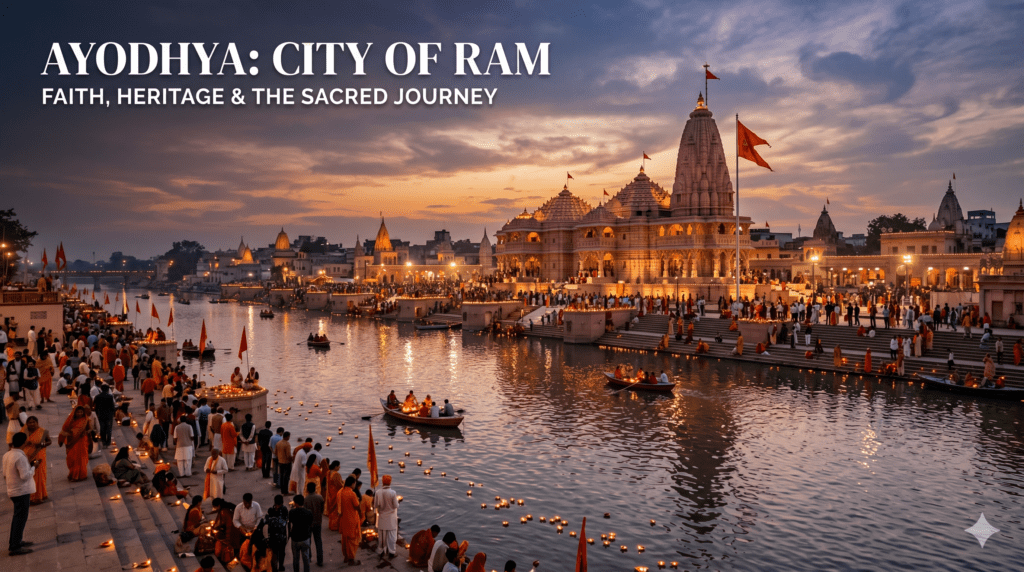
The grand resurgence of Ayodhya’s cultural prestige on the global stage is perhaps most visibly and powerfully projected through the annual orchestration of Deepotsav (the Festival of Lights) celebrated during Diwali. What historically originated as a localized, highly personal celebration commemorating Lord Rama’s mythological return to Ayodhya following his 14-year exile has been systematically engineered by the state government into an annual spectacle of massive, unprecedented scale. The event seamlessly utilizes visual grandeur, technological precision, and mass human mobilization to project cultural soft power and religious unity.
In the 2024–2025 celebration cycle, the Uttar Pradesh government successfully mobilized a massive workforce comprising thousands of university students, civil volunteers, Vedacharyas, and municipal workers to shatter international benchmarks, ultimately securing dual Guinness World Records. The sheer logistics of the event are staggering.
The primary record was achieved by the synchronized ignition of an astonishing 26.17 lakh (over 2.61 million) traditional earthen oil lamps (diyas) simultaneously across 56 interconnected ghats along the sprawling banks of the Saryu River. The meticulous counting and verification of this vast sea of illumination were conducted not by human enumerators, but by a fleet of precision drones operated by Guinness World Records representatives. The secondary record involved the execution of a synchronized Maha Aarti (ritualistic prayer offering involving fire), performed flawlessly and simultaneously by 2,128 specially trained priests and Vedacharyas standing along the riverbanks.
This breathtaking, analog display of terrestrial devotion was brilliantly coupled with high-end aerial technology. As dusk fell, a sophisticated fleet of 1,100 indigenous ‘Swadeshi’ drones took to the sky, forming a massive, synchronized aerial show that projected iconic scenes and divine imagery from the Ramayana directly into the night sky. This aerial ballet was further augmented by highly choreographed laser projections and massive pyrotechnic displays at Ram Ki Paidi.
Deepotsav, therefore, functions as far more than a mere religious festival. It is a highly coordinated, state-sponsored logistical exercise that reinforces Ayodhya’s newly minted identity as the undisputed global epicenter of Hindu spirituality. The flawless execution of such a massive event communicates a clear message regarding the state’s capacity for mega-event management, inspiring awe and cementing the city’s status as a modern cultural superpower rooted firmly in ancient traditions.
Conclusion: Balancing Antiquity with Aspirational Urbanism
The ongoing transformation of Ayodhya from a quiet, historically contested, and often underdeveloped regional town into the gleaming, high-tech vanguard of India’s spiritual tourism sector is a socioeconomic phenomenon of immense complexity and unprecedented scale. The empirical data undeniably underscores a massive economic renaissance—evidenced by the staggering triple-digit percentage growth in domestic and international visitor numbers, the rapid, explosive proliferation of both formal and informal hospitality infrastructure, and a massive, continuous influx of state and private capital targeting greenfield development and transit hubs.
The comprehensive master planning of the city, particularly highlighted by the Navya Ayodhya project, represents a fascinating, high-stakes sociological and architectural experiment. It boldly attempts to encode the ancient, esoteric Vedic principles of Vastu Shastra within the highly rigid, silicon parameters of Artificial Intelligence, renewable solar energy grids, and real-time geospatial data tracking. If executed to its full potential, Ayodhya is poised to pioneer an entirely new, globally relevant model of urbanism—one where sustainability and hyper-modernity do not override or erase historical heritage, but actively and symbiotically serve to preserve and amplify it.
However, the significant socio-economic friction documented extensively on the ground serves as a vital, sobering caveat to the narrative of unbridled progress. The extreme concentration of generated wealth within a highly localized radius immediately surrounding the temple complex, combined with the profound psychological and economic displacement of legacy communities to make way for grand boulevards, highlights the inherent, dangerous risks of rapid, top-down urban overhauls.
For Ayodhya’s metamorphosis to be truly holistic and sustainable in the long term, future municipal policy interventions and state planning must prioritize the equitable distribution of this newly generated wealth. It is imperative to engineer a seamless socio-economic integration between the traditional, legacy commercial enclaves of older Faizabad and the gleaming, high-tech, sanitized corridors of Navya Ayodhya. As the city rapidly readies its infrastructure to host upwards of half a billion global visitors annually, its ultimate historical success will be measured not merely by the soaring height of its temple spires or the sheer volume of its airport terminals, but by its fundamental ability to provide a harmonious, inclusive, and genuinely prosperous existence for the foundational residents who have called the city home long before the world arrived at its gates.